
Refrigerant leak detection and repair
We locate leaks, verify the repair, then evacuate and recharge to the correct specification. Simply adding refrigerant without fixing the leak is a temporary patch.
Serving Austin, Texas & surrounding areas
Mon–Fri 8am–6pm · Sat 9am–2pm
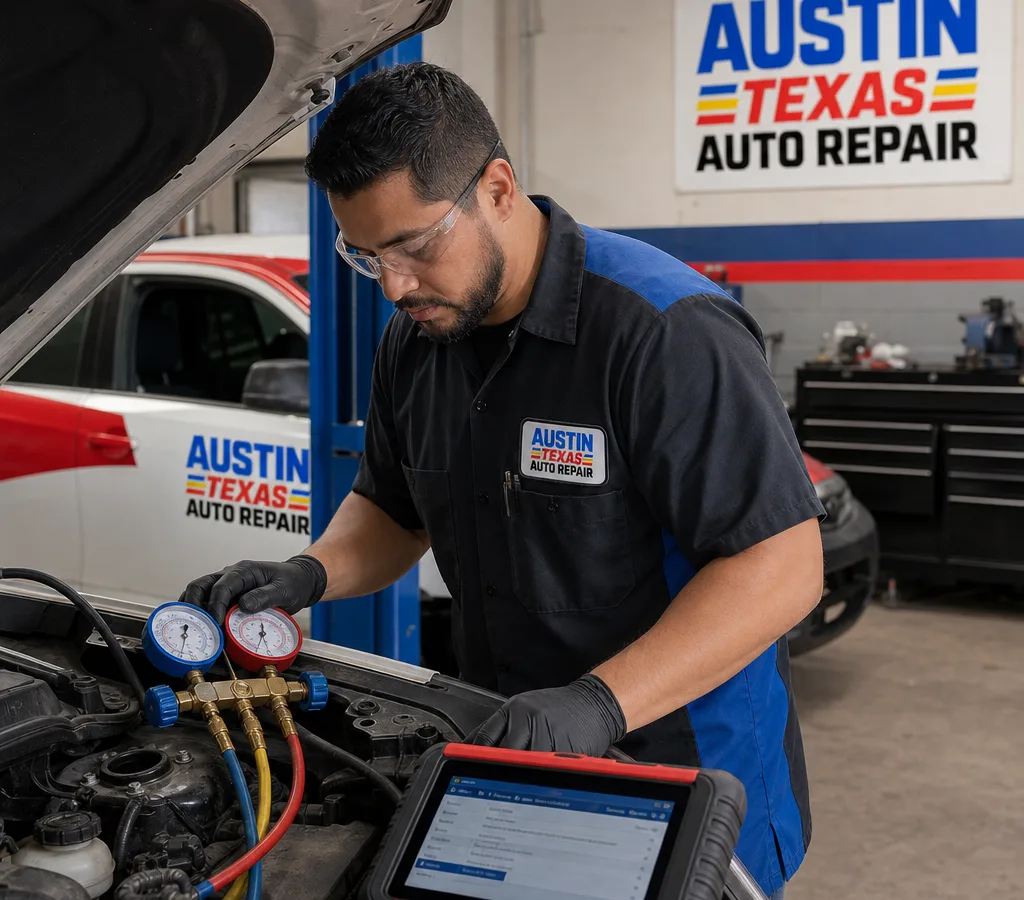
Auto A/C service in Austin, Texas
When your vents blow warm or your AC cuts out in traffic, we diagnose the problem fast and repair it right. Get clear findings, straightforward options, and cold air you can count on in Austin heat.
Measured before repaired
If you are searching for auto air conditioning repair Austin TX, you are probably dealing with one of a few urgent problems: air that is not cold, weak airflow, a blower that quits, a musty smell, or an AC system that works at speed but warms up at stoplights. In Austin, those issues show up quickly once daytime temps climb and the car is idling on I-35 or Mopac.
At Austin Texas Auto Repair, our approach is simple: confirm the cause first, then repair only what the system needs. Modern automotive AC is a sealed refrigerant system controlled by electronics and sensors. Guessing leads to repeat visits. A proper diagnosis checks pressures, temperatures, compressor control, condenser performance, and the vehicle's HVAC controls so you know exactly why the cabin is not cooling.
You will get a clear explanation of what failed, what is recommended, and what can wait. If you also need broader auto repair in Austin TX for cooling, electrical, or driveability concerns found during the inspection, we can help coordinate that work so you are not bouncing between shops.
System-wide diagnosis
A reliable auto A/C repair starts with measuring, not guessing. We begin by verifying your complaint—cold at first then warm, cold only while driving, noise with the AC on, odor, or no airflow.
In Central Texas heat, an AC system can look fine on a mild morning and fail in afternoon traffic. We test under conditions that match real driving, then recommend the repair that restores stable cooling.
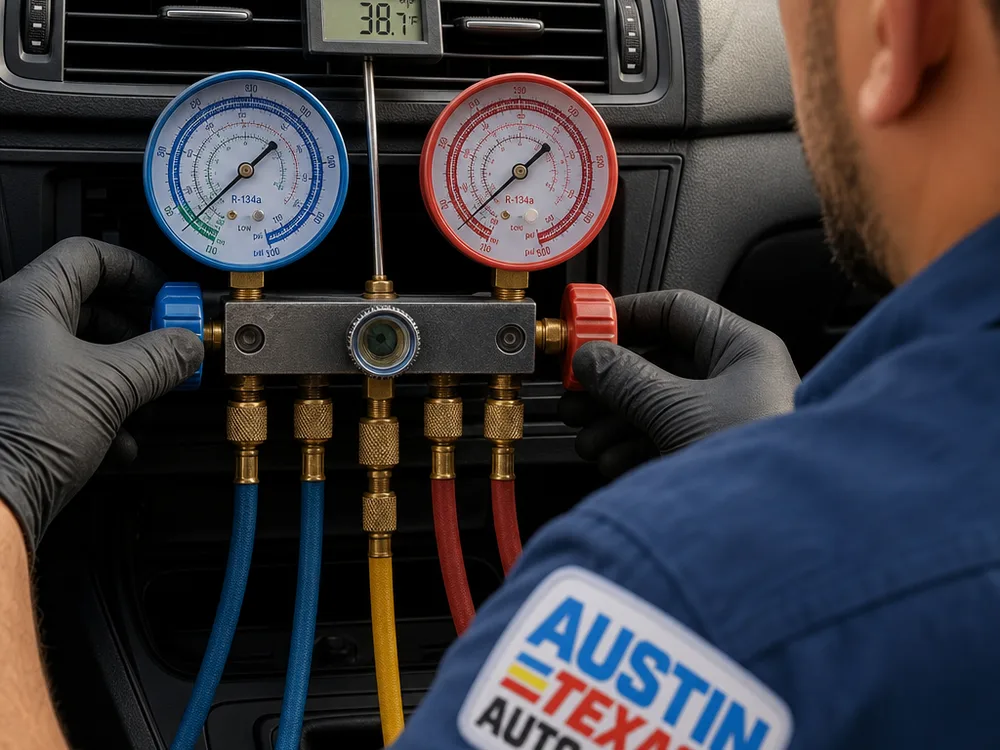
Repairs based on verified findings
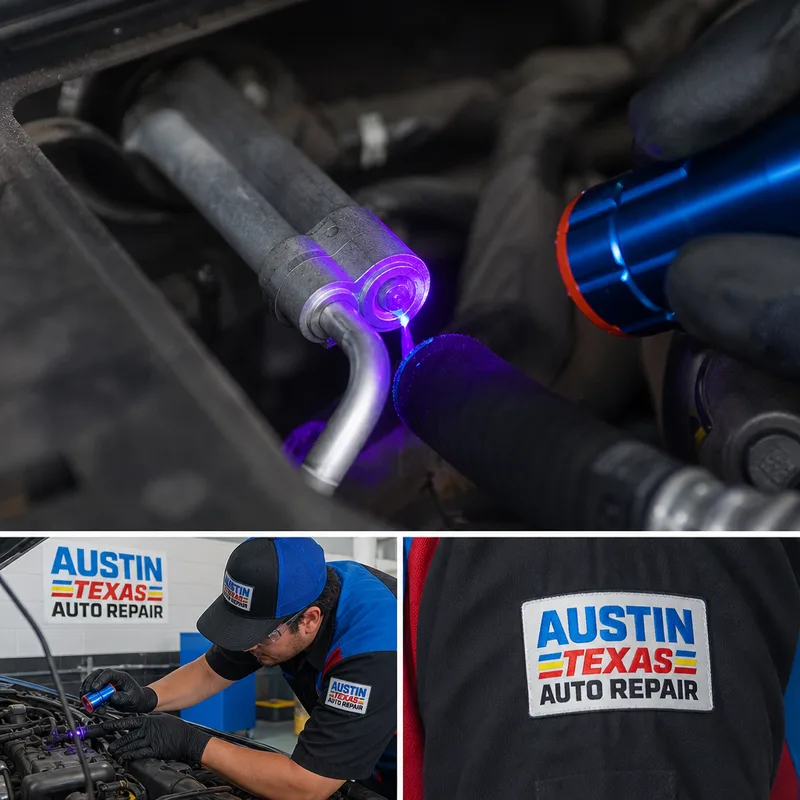
We locate leaks, verify the repair, then evacuate and recharge to the correct specification. Simply adding refrigerant without fixing the leak is a temporary patch.
When the system is serviceable, we recover remaining refrigerant, pull vacuum to remove moisture and air, and recharge accurately for consistent vent temperatures.
From noisy bearings to compressors that will not build pressure, we confirm the failure before replacement and check related components that can damage a new compressor.
Road debris damage, blocked fins, and fan issues can cause high head pressure and poor cooling at idle, especially in stop-and-go Austin traffic.
If refrigerant-side performance is cold but airflow is weak, the issue may be the blower motor, resistor or module, or restrictions near the cabin filter.
Musty smells can come from moisture at the evaporator. We assess drainage and airflow causes and recommend the appropriate corrective service.
We confirm what you are experiencing and test AC operation at idle and under load so the diagnosis matches Austin driving conditions.
We evaluate pressures, temperatures, compressor control, condenser airflow, and HVAC controls to identify the true failure point.
You get a plain-language explanation of what is failing, what parts or labor are needed, and what to expect after the repair.
After the mechanical or electrical fix, we service the refrigerant properly, including evacuation and correct refill where required.
We recheck vent temperature and operating pressures to confirm the system cools consistently, including at idle where many issues show up.
Pricing factors
Most auto AC repair in Austin typically ranges from about $180 to $1,600+, depending on what failed. A basic diagnostic and recharge may fall around $180 to $450, while leak repairs and component replacements—such as a condenser, compressor, or evaporator-related work—commonly run $600 to $1,600+.
Final price depends on the vehicle, refrigerant type, how accessible the failed part is, whether there is contamination in the system, and whether additional items such as a receiver/drier or expansion device are recommended with the primary repair. The exact cost is confirmed after the on-vehicle inspection and testing.
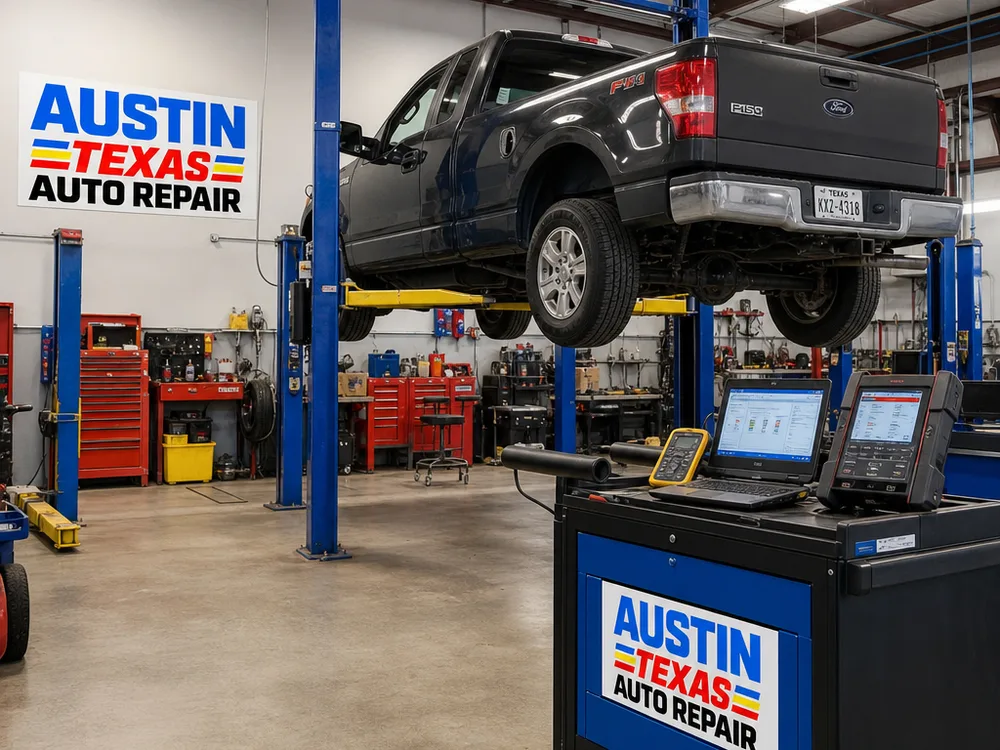
Testing you can understand
Before the next hot commute
If your AC is fading in traffic, cycling on and off, or only cooling some of the time, get it diagnosed before the heat turns a small issue into a bigger repair.
Before you schedule
This usually points to poor heat rejection at the condenser or a low refrigerant charge, both of which show up most at idle. In Austin stop-and-go conditions, a weak radiator or condenser fan, blocked condenser fins, or an overpressure issue can cause vent temperatures to rise quickly. Proper testing compares pressures and temperatures at idle and higher RPM.
Yes. Leak detection typically includes visual inspection for oily residue, pressure testing where appropriate, and dye or an electronic leak detector depending on the vehicle and symptoms. Once repaired, the system should be evacuated and recharged to specification.
Many diagnostics and minor repairs can be completed the same day, while larger jobs may take longer if access is complex or parts are needed. A straightforward recharge or electrical fix is often quicker than compressor or evaporator-related work. You will receive a realistic timeline after inspection.
You can usually drive, but some failures can worsen or stress other systems. A slipping compressor clutch, failing fan, or overpressure condition can lead to additional damage. If you notice burning smells, squealing, or rising engine temperature, stop driving and have the vehicle inspected.
A recharge restores refrigerant level but does not correct why it was low. Automotive AC is sealed, so a low charge typically indicates a leak or prior service issue. A real repair identifies and corrects the source, then services the system to the proper charge.
Most late-model vehicles use R-1234yf, while many older vehicles use R-134a. We confirm the refrigerant type using the vehicle's under-hood label and follow the proper recovery and recharge process for that system.
Yes. A musty smell commonly relates to moisture at the evaporator, trapped debris, or drain issues. We inspect whether the source is drainage, airflow restriction, or buildup on evaporator surfaces and recommend the appropriate corrective service.
We serve drivers across Austin, including daily-commute corridors where AC problems show up quickly in traffic. That includes areas such as Downtown, South Congress, Mueller, and The Domain.
Get a clear AC repair plan
Tell us what your AC is doing—warm at idle, weak airflow, strange noise, or intermittent cooling—and we will run the right diagnostics, explain the fix, and confirm performance before you pick up your vehicle.