
Repair planning that starts with a real inspection
We look beyond the obvious dent. We check mounting points, reinforcements, sensors, lights, and panel alignment so the estimate reflects the full scope, not guesses.
Serving Austin, Texas & surrounding areas
Mon–Fri 8am–6pm · Sat 9am–2pm
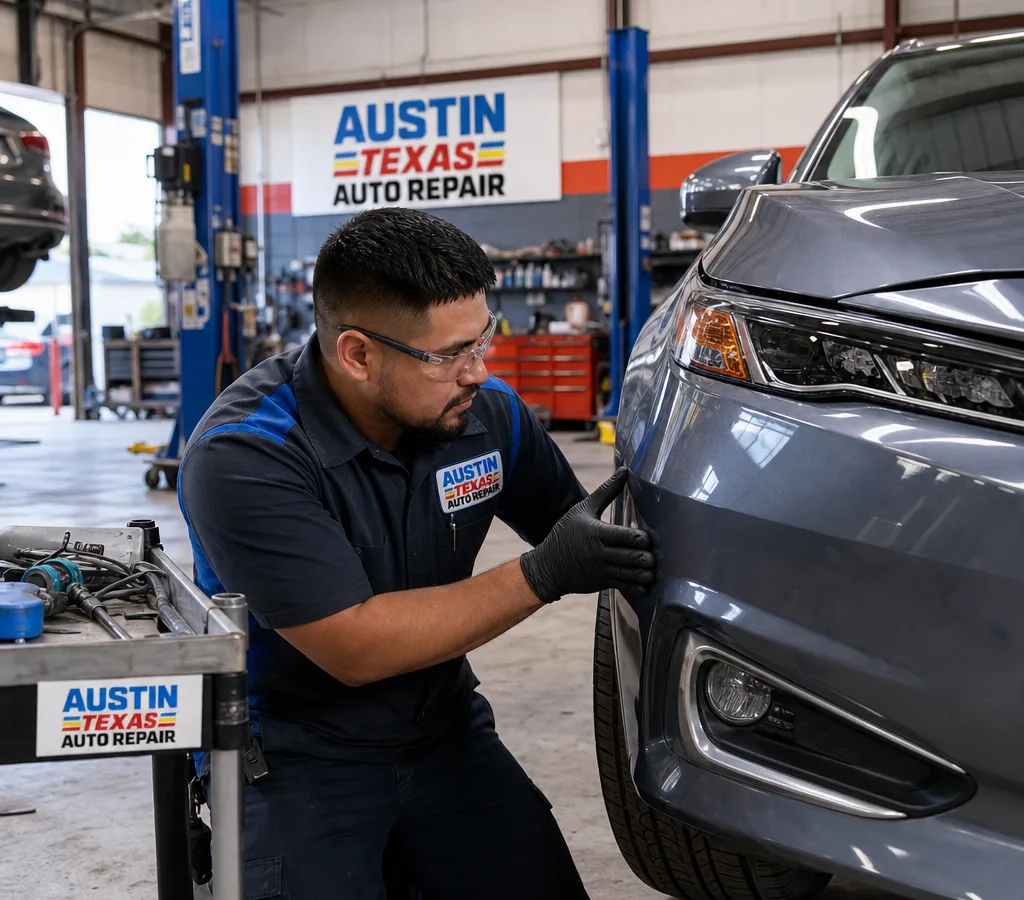
Auto body repair in Austin, Texas
Collision damage, scrapes, dents, and paint issues fixed with clear estimates, careful prep, and a finish that matches. Get a straightforward plan before any work starts.
Safety, finish, and clear scope
When you search for the best auto body shop Austin drivers trust, you are usually trying to answer three questions fast: Will the repair be structurally correct, will the paint match, and will the estimate and timeline stay clear.
At Austin Texas Auto Repair, our Austin auto body team focuses on repairs that look right and protect the vehicle long-term. That means proper disassembly so hidden damage is not missed, measuring and restoring panel alignment, and treating paint as a process, not a quick spray. If you are dealing with an insurance claim, we can work from the claim paperwork while still writing a repair plan based on what the car actually needs once it is inspected.
Austin driving also has its own realities: high traffic corridors, tight parking lots, and sudden hail and storm damage can turn a small hit into multiple panels that need attention. The goal is to restore safety, appearance, and value with documentation you can understand, even if you have never needed body work before.
If you are also looking for mechanical diagnosis after a collision—warning lights, a vibration, A/C issues, or a pull—an auto repair shop in Austin Texas can coordinate mechanical inspection alongside body work so you are not juggling multiple drop-offs.
What careful body work requires
We look beyond the obvious dent. We check mounting points, reinforcements, sensors, lights, and panel alignment so the estimate reflects the full scope, not guesses.
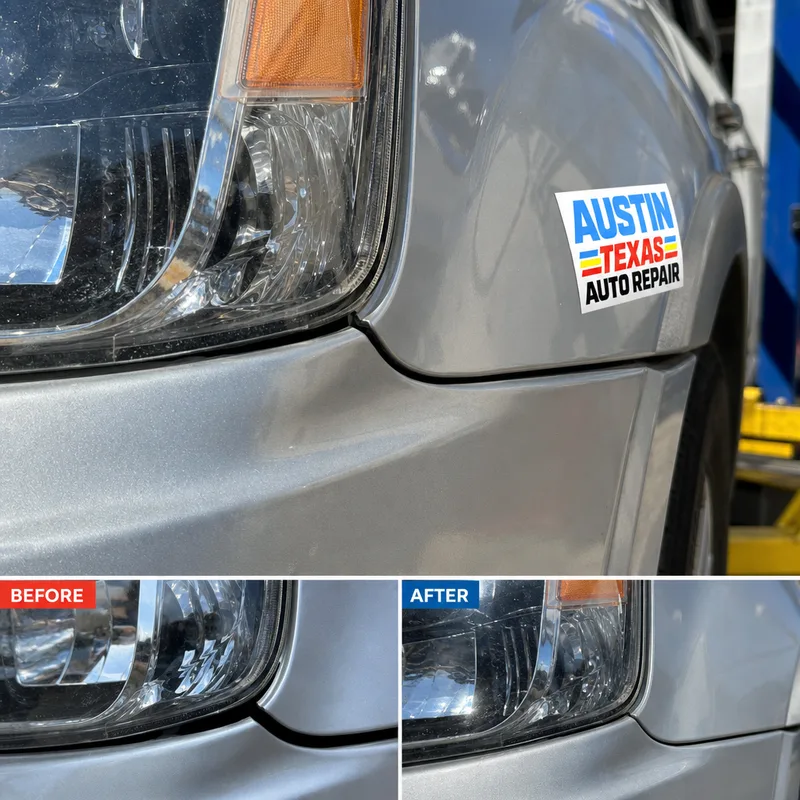
Accurate color depends on surface prep, correct primers and sealers, and blending into adjacent panels when needed, especially on metallic and pearl finishes.
OEM, aftermarket, and recycled parts each have pros and tradeoffs. We walk through availability, fit, and finish so you can choose based on your vehicle and budget.
Many cars have ADAS sensors and cameras behind bumpers and windshields. Repairs must account for sensor locations and proper reassembly to keep systems functioning as designed.
You should always know what is being repaired, what is being replaced, and why. We keep the process understandable and confirm changes before moving forward.
Consistent panel gaps, clean edges, proper texture, and correct gloss level matter. We aim for a repair that does not draw your eye panel to panel.
Collision, dent, and paint service
A solid body shop should be able to handle the full range of everyday damage without pushing you into a one-size-fits-all fix. Our work typically includes:
Because Austin drivers commute across busy routes and park in compact garages, we see a lot of low-speed impacts where the visible damage is minor but the brackets, absorber, or mounting points behind the bumper are cracked or shifted. A proper inspection—not just a quick glance—is what keeps a small repair from turning into a repeat visit.
If you are comparing shops, ask how they handle disassembly, paint blending, and parts fitment checks. Those three areas tell you a lot about whether you are truly dealing with the best auto body shop in Austin TX for your situation.
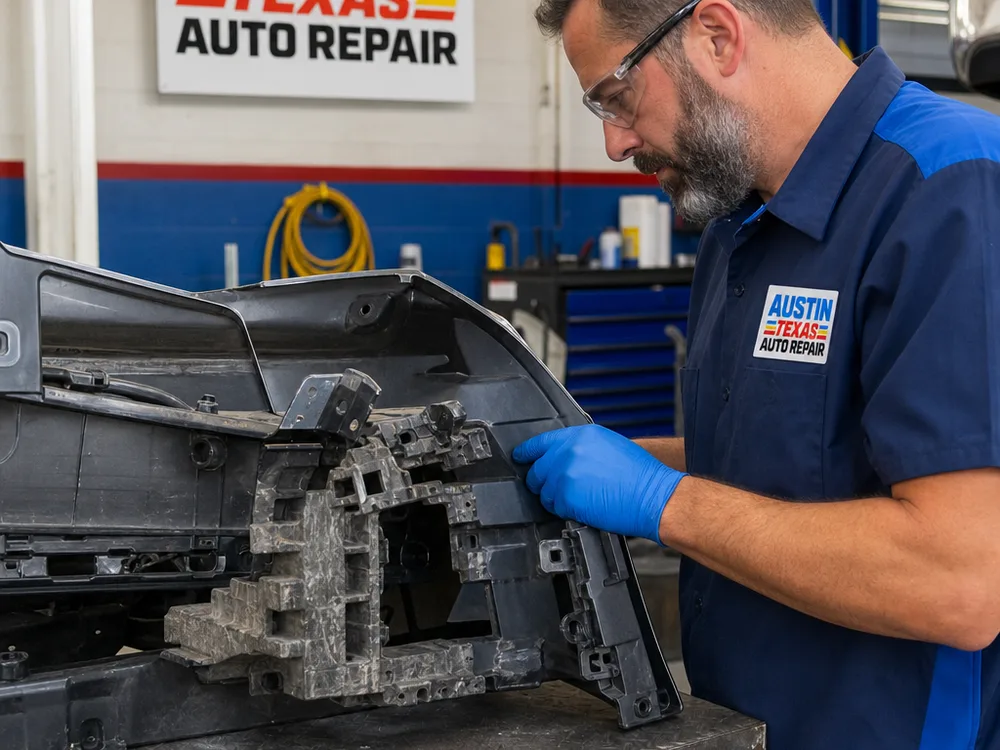
We examine the damaged area, check related panels and components, and document what needs repair versus replacement. You get a written scope you can review.
If you are using insurance, we align the repair plan with the claim process and handle the back-and-forth needed to keep work moving while staying accurate.
Many issues are behind the visible panel. We remove necessary trim and parts to confirm mounting points, reinforcements, and any components affected by impact.
We restore alignment and panel gaps, repair or replace components, and test-fit parts before paint so the final assembly does not fight the finish.
We prep surfaces correctly, apply the appropriate undercoats, and paint with color matching and blending where needed so the repaired area looks consistent in different light.
After reassembly, we check operation of affected parts—lights, hood or door closure, and sensors where applicable—and review the finish before you pick up.
Pricing factors
Auto body repair in Austin typically ranges from about $250 to $900 for minor dents, scuffs, or small paint work, while collision repairs that involve multiple panels and parts replacement often run $1,500 to $6,000+, depending on the vehicle and the damage. Paint matching, blending, advanced materials, sensor-related work, and parts availability can all change the final price.
The most accurate number comes after an in-person inspection and a written repair plan—and, if relevant, the insurer's estimate—so scope and parts can be confirmed before work begins.
Repair finish and fitment
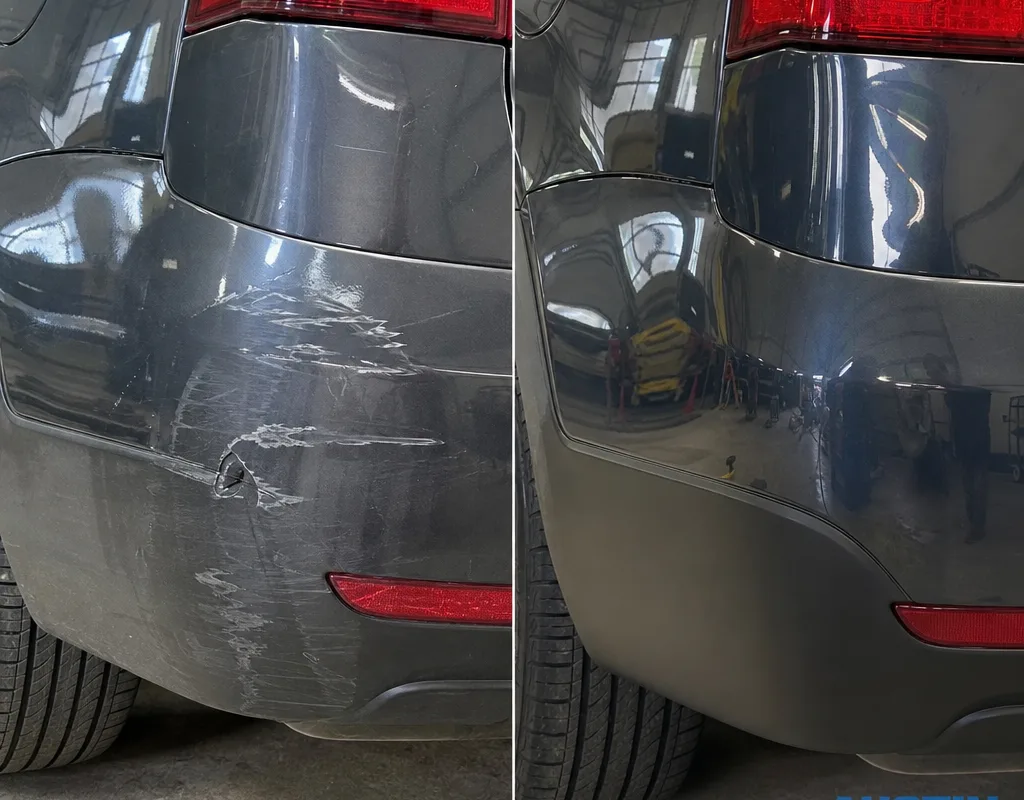
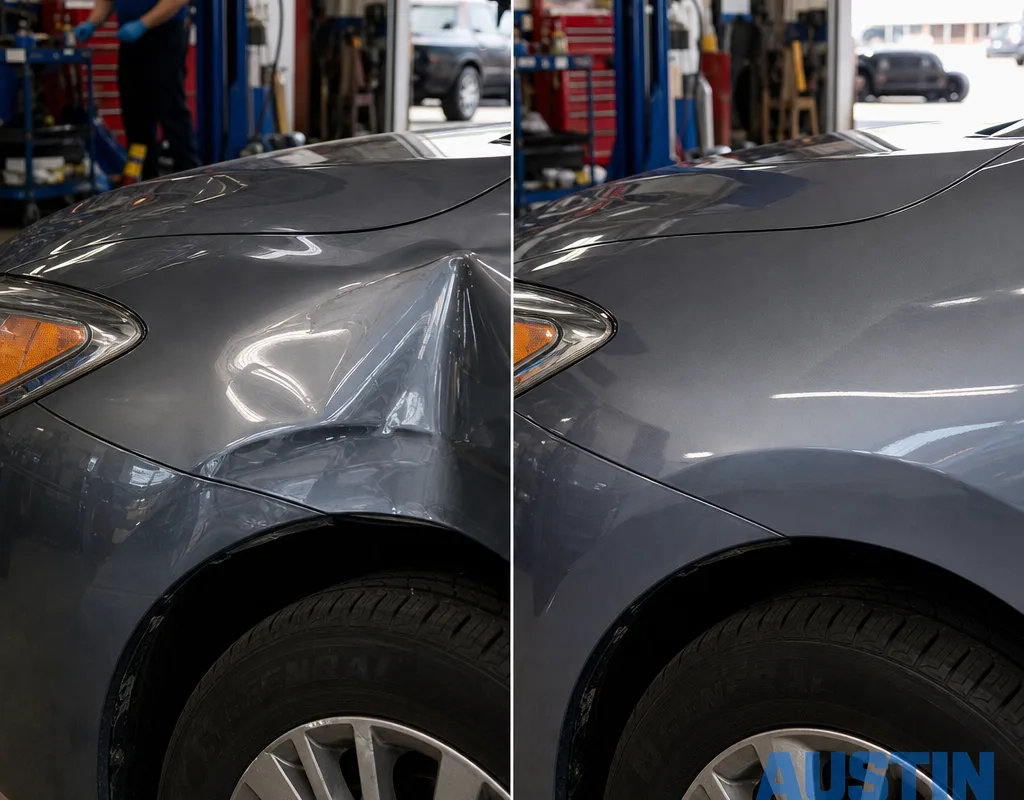
Customer feedback
“The estimate was easy to understand, and they explained why the bumper needed to come off to check the brackets. The paint match came out right, even in direct sun.
“I had a side swipe that looked minor until they showed me the shifted mounting points. They fixed the alignment and the doors close like they did before.
“They kept me updated when parts took longer than expected and didn't rush the paint. The finish looks factory from panel to panel.
Before you schedule
Choose a shop that explains the repair plan in plain language and can show how they will confirm hidden damage, paint match, and final fitment. In Austin, it also helps to ask how they handle parts delays and whether they account for modern bumper components and sensors during disassembly and reassembly.
A good match is achievable when the shop does proper prep, uses the correct undercoats, and blends into adjacent panels when needed. Metallic and pearl colors can shift in different light, so blending and test panels are often part of what makes the repair look consistent outdoors, not just under shop lights.
In Texas, you generally have the right to choose the repair facility you want. If you bring in a claim estimate, the shop can review it, write a repair plan based on inspection, and communicate with the insurer if additional hidden damage is found after disassembly.
Minor repairs can sometimes be completed in a few days, while collision repairs that require multiple panels, paint blending, and parts replacement often take one to two weeks or more. The biggest variables are parts availability and whether additional damage is discovered once components are removed.
Sometimes, yes, if the paint is intact and the dent shape and location allow for paintless-style correction or careful metal work. If the paint is cracked, stretched, or missing, repainting is usually required to protect the panel and make the finish consistent.
Bring the vehicle—cleaner is better for seeing damage—any insurance claim information if you have it, and notes on any new warning lights or driveability changes since the incident. A quick walk-around plus a closer inspection helps produce a written scope that reflects what the repair actually involves.
Start with a written scope
If you are comparing Austin auto body shops, start with an inspection and a written scope that covers repair versus replacement, paint approach, and expected timing. Share what happened and what you want the finished result to look like, and we will map out the next steps.